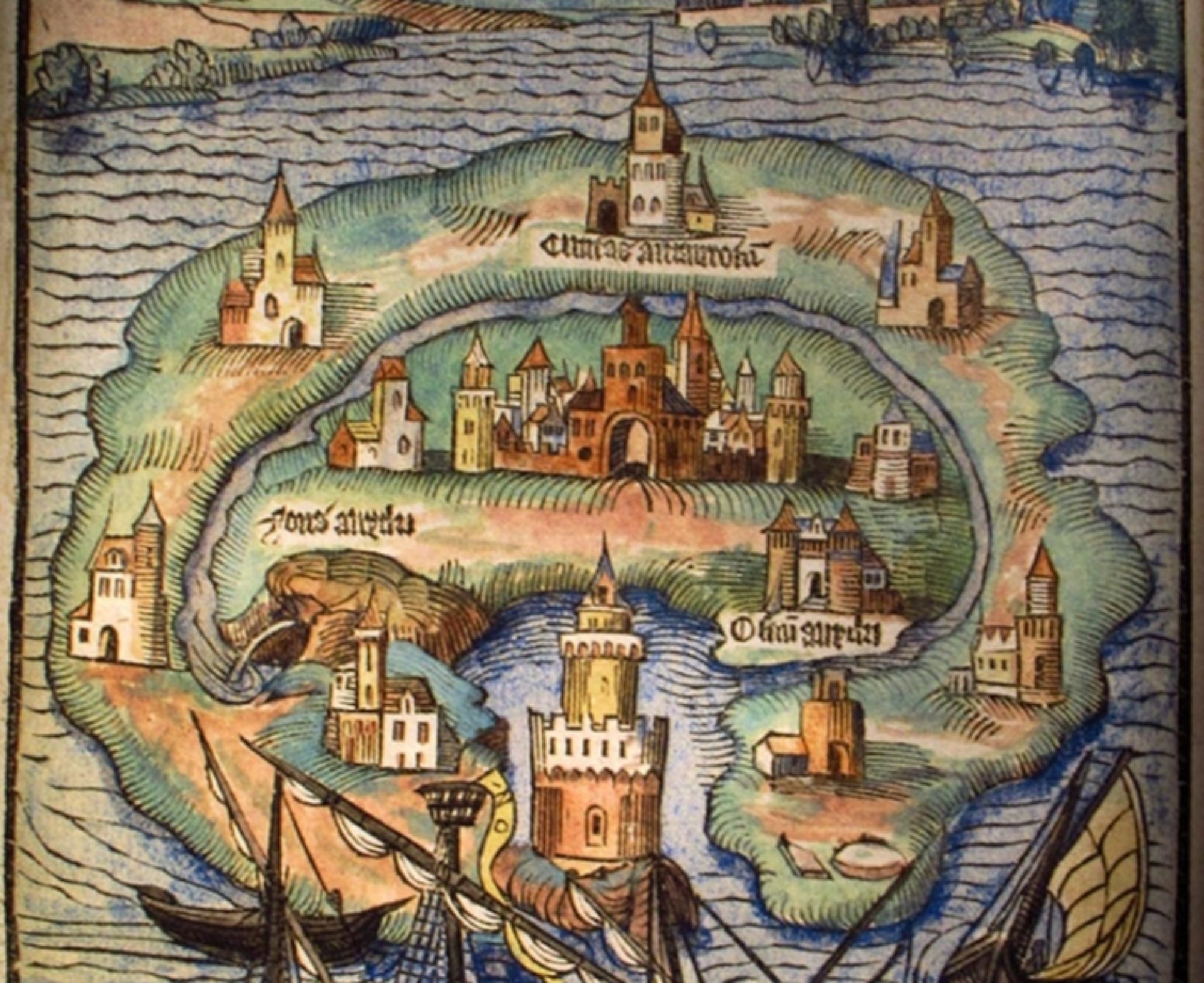
Major Comprehensive Exams – Imagining the Future: Time and Space at the End of the World

Theory

  1. David Harvey, Spaces of Hope
  2. Eric D. Smith, Globalization, Utopia and Postcolonial Science Fiction: New Maps of Hope
  3. Lyman Tower Sargent and Gregory Claeys, The Utopia Reader
  4. Tom Moylan and Raffaella Baccolini, Dark Horizons: Science Fiction and the Dystopian Imagination 
  5. Tom Moylan, Scraps of the Untainted Sky
  6. Robert J. Tally, Utopia in the Age of Globalization
  7. Fredric Jameson, “Future City”
  8. Patrick Parrinder, Learning from Other Worlds: Estrangement, Cognition, and the Politics of Science Fiction and Utopia
  9. Ruth Levitas, “The Archive of Feet: Memory, Place, and Utopia.” Exploring the Utopian Impulse: Essays on Utopian Thought and Practice.
  10. Ralph Pordzik, Futurescapes Space in Utopian and Science Fiction Discourses 
  11. Louis Marin, Utopics: Spatial Play
  12. Roger Luckhurt, A Cultural History of Corridors
  13. Roger Luckhurst, Zombies: A Cultural History
  14. Rob Kitchin and James Kneale, Lost in Space: Geographies of Science Fiction 
  15.   Peter Yoonsuk Paik, From Utopia to Apocalypse : Science Fiction and the Politics of Catastrophe 
  16. William H. Katerberg, Future West: Utopia and Apocalypse in Frontier Science Fiction
  17. Marlene Goldman, Rewriting Apocalypse in Canadian Fiction
  18. Christopher Palmer, “Ordinary Catastrophes” from Green Planets: Ecology and Science Fiction
  19. Richard Dellamora, Post-Modern Apocalypse: Theory and Cultural Practice
  20. Elizabeth K. Rosen, Apocalyptic Transformation : Apocalypse and the Postmodern Imagination
  21. Patricia Viera, Existential Utopia
  22. Sarah Juliet Lauro, Zombie Theory: A Reader
  23. Stacy C. Kozakavich, The Archaeology of Utopian and Intentional Communities 

Literary Fiction

  1. Stephen King, The Stand
  2. Cormac McCarthy, The Road
  3. Margaret Atwood, Oryx and Crake
  4. Octavia Butler, Parable of the Sower
  5. Meg Ellison, The Book of the Unnamed Midwife
  6. Russell Hoban, Riddley Walker
  7. D. James, Children of Men
  8. Richard Matheson, I am Legend
  9. George R. Stewart, Earth Abides
  10. William R. Forstchen, One Second After
  11. Pat Frank, Alas, Babylon
  12. Walter M. Miller, Jr., A Canticle for Leibowitz
  13. A. Fletcher, A Boy and His Dog at the End of the World
  14. Gébé, Letters to Survivors
  15. Anne Corlette, The Space Between the Stars
  16. Douglass Coupland, Girlfriend in a Coma
  17. Carson Whitehead, Zone One

Films

  1. The Ravenous
  2. Here Alone
  3. Resident Evil
  4. Zombieland
  5. Io Last on Earth
  6. Children of Men


Biography

Current Research

Kirsten Bussière is a doctoral candidate whose SSHRC-funded research analyses what Mikhail Bakhtin calls the chronotope, or the ways that literature represents time and space, in post-apocalyptic fiction. In her dissertation, she examines the ways that different forms of collective memory emerge in response to disaster, which ultimately exposes tensions between nostalgic longing for the past and the development of progressive new futures. Since this genre offers a unique temporal perspective, which reframes our real-world present as the recent past, this project intends to serve as a critical intervention where we can re-examine our current precarious position in a novel way.

Fields of Interest

Post-Apocalyptic Fiction
Science Fiction
Digital Humanities
Utopian Studies

Memberships

Utopian Studies Society
Golden Key International Honour Society

Publications

“Beginning at the End: Indigenous Survivance in Moon of the Crusted Snow.” Foundation 136, 49.2 (2020) 47-58.

“Chapter Four: Text Analysis.” Digital Humanities – A Primer, Pressbooks, 2018, carletonu.pressbooks.pub/digh5000/chapter/chapter-4-text-analysis/.

“Digital Humanity: Collaborative Capital Resistance in Doctorow’s Walkaway.” Vector: Future Economies 288 (2018): https://vector-bsfa.com/2018/11/29/digital-humanity-collaborative-capital-resistance-in-cory-doctorows-walkaway/.

“Feminist Future: Time Travel in Marge Piercy’s Woman on the Edge of Time.” MOSF Journal of Science Fiction 3.3 (2019): 33-42, https://publish.lib.umd.edu/?journal=scifi&page=article&op=view&path%5B%5D=482&path%5B%5D=87

Conference Presentations

“Beginning at the End: Indigenous Survivance in Waubgeshig Rice’s Moon of the Crusted Snow” Utopia, Dystopia, and Climate Change, Utopian Studies Society, Europe, Monash University Prato Centre. 2 July 2019.

“Memories of the Future Past: Defamiliarizing the Now in Post-Apocalyptic Fiction.” [Per]forming the Present: Studies in Narrative, Temporality, and Zeitgeist, Department of English, Carleton University. 28 April 2019.

“Endless Authorship: Fanfiction, Copyright, and the Extended Archie Universe.” The Riverdale Universe: A Semi-Academic Conference, Season Two, University of the Fraser Valley. 13 March 2019.

“Capitalist Disease: Degenerate Utopias and the Zombie Apocalypse.” The Age of Anxiety: Literary Studies in a Culture of Risk, University of Ottawa. 10 March 2019.

“Feminist Future: Time Travel in Marge Piercy’s Woman on the Edge of Time.” Carleton University English Department’s MA Colloquium. Carleton University. 6 July 2018.

“Digital Humanity: Collaborative Capital Resistance in Doctorow’s Walkaway.” Just Speculating: Economics and the Future, Institute for Advanced Studies in the Humanities, University of Edinburgh. 28 June 2018.

“Landmark Mainstream Perspectives on Geek Culture.” Reading Comic Con: A Symposium. Carleton University. 4 April. 2018.

Awards and Scholarships

2020 Joseph-Armand Bombardier Canada Graduate Scholarship – Doctoral
2020 University of Ottawa Excellence Scholarship
2020 Ontario Graduate Scholarship (awarded but declined)
2019 Frans De Bruyn Travel Award (University of Ottawa)
2018 English Doctoral Scholarship (University of Ottawa)
2018 Doctoral Scholarship (University of Ottawa)
2018 Graduate Scholarship (Carleton University)
2018 Dean of Graduate Studies Entrance Scholarship for Domestic Students (Carleton University)

Major Comprehensive Exams – 19th and 20th Century American Literature

19th Century Fiction

Louisa May Alcott, Little Women

Abraham Cahan, The Rise of David Levinsky

Charles Chesnutt, Anthologized Short Stories and The Marrow of Tradition

Lydia Maria Child, Anthologized Essays and Hobomok

Kate Chopin, The Awakening

James Fenimore Cooper, The Last of the Mohicans

Stephen Crane, Maggie: A Girl of the Streets and Red Badge of Courage 

Nathaniel Hawthorne, The Scarlet Letter and The Blithehdale Romance 

William Dean Howells, A Traveler from Altruria 

Washington Irving, “Rip Van Winkle” and “The Legend of Sleepy Hollow”

Henry James, The Portrait of a Lady

Sarah Orne Jewett, The Country of the Pointed Firs

Herman Melville, Moby-Dick

Edgar Allan Poe, Anthologized Short Stories and “Philosophy of Composition”

Harriet Beecher Stowe, Uncle Tom’s Cabin

Mark Twain, Huckleberry Finn


19th Century Non-Fiction Prose

Henry Adams, Anthologized Works

William Apess, Anthologized Works

Frederick Douglass, Narrative of the Life of Frederick Douglass

Ralph Waldo Emerson, “Nature,” “Self-Reliance,” and “Experience”

Margaret Fuller, Woman in the Nineteenth Century

William Dean Howells, “I Talk of Dreams” and “War Stops Literature”

Harriet Jacobs, Incidents in the Life of a Slave Girl

Henry David Thoreau, Walden and”Civil Disobedience”

Zitkála-Šá, Oklahoma’s Poor Rich Indians


19th Century Poetry

Emily Dickinson

Henry Wadsworth Longfellow

Edgar Allan Poe

Walt Whitman


19th Century Criticism

Miller, Errand into the Wilderness (1956)

Marx, The Machine in the Garden (1964)

Bercovitch, The American Jeremiad (1978)

Douglas, The Feminization of American Culture (1978)

Davidson, Revolution and the Word (1986)

Tompkins, Sensational Designs (1986)

Gilmore, American Romanticism and the Marketplace (1988)

Brown, Domestic Individualism (1990)

Kaplan, The Social Construction of American Realism (1992)

Morrison, Playing in the Dark (1992)

Sundquist, To Wake the Nations (1993)

Bercovitch, ed. The Cambridge History of American Literature, vols. 1-4 (1994)


20th Century Fiction and Prose

Gloria Anzaldúa, Borderlands/La Frontera: The New Mestiza

James Baldwin, Go Tell It on the Mountain and Notes of a Native Son

Willa Cather, O Pioneers!

John Dos Passos, Manhattan Transfer

Theodore Dreiser, Sister Carrie

Ralph Ellison, Invisible Man

William Faulkner, Go Down, Moses

F. Scott Fitzgerald, The Great Gatsby

Ernest Hemingway, In Our Time

Zora Neale Hurston, Their Eyes Were Watching God

Maxine Hong Kingston, The Woman Warrior

Scott Momaday, The Way to Rainy Mountain

Toni Morrison, Beloved

Vladimir Nabokov, Lolita

Flannery  O’Connor, “A Good Man is Hard to find” and “Good Country People”

Thomas Pynchon, The Crying of Lot 49

Philip Roth, American Pastoral

Leslie Marmon Silko, Ceremony

Gertrude Stein, Anthologized Works

John Steinbeck, The Grapes of Wrath

Jean Toomer, Cane

Edith Wharton, The Age of Innocence

Richard Wright, Native Son and Anthologized Works

E. B. Du Bois, The Souls of Black Folk


20th Century Poetry

John Ashbery

Amiri Baraka

Elizabeth Bishop

Gwendolyn Brooks

Hart Crane

T.S. Eliot

Robert Frost

Allen Ginsberg

Joy Harjo

Robert Hayden

Susan Howe

Langston Hughes

Robert Lowell

Marianne Moore

Charles Olson

Sylvia Plath

Ezra Pound

Adrienne Rich

Wallace Stevens


20th Century Criticism

Kazin, On Native Grounds (1942)

Kenner, A Homemade World (1975)

Perloff, Dance of the Intellect (1981)

Baker, Modernism and the Harlem Renaissance (1987)

Gelpi, A Coherent Splendor (1987)

Gilbert and Gubar, No Man’s Land (1987)

McHale, Postmodernist Fiction (1987)

Nelson, Repression and Recovery (1989)

Du Plessis, The Pink Guitar (1990)

North, The Dialect of Modernism (1994)

Michaels, Our America (1995)

Bercovitch, ed. The Cambridge History of American Literature, vols 5-8 (1994)